Last night, Barack Obama won an election of tremendous historical and political significance. As an Obama supporter, I'm certainly very pleased with the victory as well as the positive reception his election has received around the world.
But my celebratory exterior belies the nerd within. I must have spent 18 out of the last 24 hours staring at that electoral map, trying to uncover the secrets behind Obama's lopsided drubbing of John McCain. Certainly, if you are one to believe the pre-election polling, this kind of performance was expected of Obama. In spite of these polling data, McCain's claims of a comeback and the so-called "Bradley Effect" left many on both sides of the aisle uncertain about what would happen on November 4th. As it turns out, the election went almost exactly according to the pre-election polling. Obama even stands to add icing to the cake if he wins either of the two remaining undecided races in Missouri and North Carolina.
So how did he do it? I'll save the hard analysis for another day, but studying the electoral map and comparing it to the 2004 election geography, some very telling facts arise that help tell the story of Obama's victory:
If you give North Carolina to Obama and Missouri to McCain (as it appears it will go), Obama will end up winning 364 electoral votes, 94 more than is needed to win and 78 more than Bush's 286 electoral votes won in 2004. It is also 26 more than Karl Rove predicted.
In addition to holding every blue state from 2004, Obama won nine states in 2008 that John Kerry lost: Colorado, Florida, Indiana, Iowa, Nevada, New Mexico, North Carolina, Ohio and Virginia.
In addition to the newly acquired blue states, Obama pushed McCain in other traditionally red states. Obama got within ten percentage points of McCain in seven states carried by Bush in 2004: Missouri (-1 point), Montana (-3 points), Georgia (-5 points), North Dakota (-8 points), South Dakota (-8 points), Arizona (-9 points) and South Carolina (-9 points). Bush carried these states by an average of 16.3 points.
In the 2004 "Bush States," Bush beat Kerry by an average margin of victory of 18.2 percent. In these same states in 2008, McCain beat Obama by an average of only 9.5 percent.
Obama won his home state of Illinois by 25 points, while McCain won Arizona by only 9 points. (Obama also won his former home state of Hawaii by 45 points.)
In 2004 Kerry won six states by 3 or fewer points: Michigan, Minnesota, New Hampshire, Oregon, Pennsylvania and Wisconsin. Obama won these same six states by an averageof 12.3 points.
Compared to Bush in 2004, McCain performed better in only two states, Louisiana and Arkansas. McCain did roughly the same in Alaska and Tennessee, and worse than Bush in the remaining 46 states.
Tomorrow, in an event nearly two years in the making, Americans will finally elect their next President. The McCain campaign and the right wing media are attempting to interpret the most minute of polling fluctuations as McCain "closing the gap" on Barack Obama. The reality is that, while McCain is seeing a slight increase in support, so is Obama, a result of undecided voters solidifying their choice as November 4th approaches. The election analysis site fivethirtyeight.com currently gives Obama a 98.1% chance of winning. Pollster.com still has Obama leading comfortably in swing states of Colorado, Nevada, Ohio, Iowa, Pennsylvania and Virginia, and leading slightly in Florida, Missouri, North Dakota and North Carolina. CNN's Poll of Polls shows very similar findings. Fivethirtyeight.com projects Obama to win 340 electoral votes to McCain's 198. By Pollster.com estimates, McCain would need to win every toss up state and every blue leaning state to get the minimum 270 electoral votes needed to win.
That said, many are predicting a very tight race much like we saw in 2000 and 2004. Why do people still think McCain can win? As far as I can tell, there are really only three reasons anyone can still hold out hope for McCain:
1. The "Bradley Effect"
The much-publicized phenomenon named for former Los Angeles mayor and unsuccessful gubernatorial candidate Tom Bradley has been used as evidence of a possible unreliability of pre-election polling. The idea is that a social desirability bias exists among polling respondents, causing them to tell pollsters they intend to vote for a minority candidate when in fact they do not. Some believe this effect can make as much as a 6 percentage point difference, which could swing some Obama-leaning states over to McCain.
2. Undecided voters will vote McCain
There is an idea floating around that undecided voters will opt for McCain because he is seen as more experienced and less risky. Also, some undecideds actually represent "Bradley Effect" McCain voters who claim to be undecided so as not to appear negative to the ethnic minority candidate. While there may be some merit to that idea, it is probably not that significant an edge for McCain, and the undecided voters currently only make up 3-4% of respondents polled. Even if the undecideds go for McCain 2 to 1, that only represents 2-3 percentage points, not enough to tip the balance in his favor in critical swing states.
3. GOP election-day shenanigans
Rolling Stone recently published an article detailing the GOP strategy to suppress to vote. Stricter voter registration laws will no doubt result in many eligible voters being turned away at the polls due to ID issues, typos and technicalities. The long lines that plagued many Democratic-leaning precincts in 2004 have already been an issue in early voting locations. Add to that Republican voter intimidation campaigns, phony claims of voter fraud, and voting machine "glitches," and it's easy to see why Republicans like McCain's chances despite polling data to the contrary.
Do I believe these things will have an effect on the election? Absolutely. Do I think they will tip the election in McCain's favor? Not by a long shot. In fact, I tend to believe Obama will win by pretty much the same margins the polls are predicting, if not more. For every election day unknown that benefits McCain, there is an equally compelling unknown working in Obama's favor:
A. Cellphone-only households.
Public opinion surveys, while often very reliable, do not take into account households (like mine) that have no land line telephone. Paul Maslin, Salon.com contributor and partner at the public opinion firm Fairbank, Maslin, Maullin & Associates, noted that cellphone-only voters made up 7.1% of all voters in 2004. That number is likely to be much higher this year. So why does this help Obama? Because this demographic is more highly represented by young adults, minorities and the poor, all more likely to vote for Obama. Maslin suggests that the cellphone-only factor will likely give Obama an additional 2% to 4% boost nationwide. That is roughly equivalent to the percentage of undecideds McCain hopes will swing to his side.
B. The Enthuisiasm Gap
While survey firms usually only include data of "likely voters," not all likely voters are created equal. In a recent ABC News/Washington Post Poll, 63% of Obama supporters were "very enthusiastic" about their candidate. Only 29% of McCain supporters felt that way about the GOP candidate. One can fairly safely assume that the more enthusiastic a voter is for his/her candidate, the more like he/she is to actually vote for that candidate. Assuming the polling data are correct, Obama supporters are simply more likely to get to the polls than McCain supporters. Not only does enthusiasm increase voter turnout among the enthused, it also has the beneficial side effect of generating a massive volunteer staff, as the Obama campaign has done. Not only will Obama enthusiasts get to the polls, they will get others to the polls. Even with the addition of Sarah Palin to pander to the Evangelical Republican base, support for McCain-Palin remains tepid when compared to Obamamania.
Looking at the electoral map, McCain needs to win several states where Obama currently holds leads of 5 to 10 percentage points (Ohio, Pennsylvania, Colorado, Virginia and Nevada). The Bradley Effect, undecided voters and GOP vote suppression will certainly have an impact. The problem for McCain is that that impact will likely be offset and then some by the turnout of cellphone-only voters and Obama enthusiasts. I believe factors A and B to be much more influential than factors 1, 2 and 3. So for McCain to win, he would essentially need ALL THREE factors to happen and for factors A and B not to happen. This scenario is highly unlikely. More likely, in my opinion, is that Obama will actually beat pre-election polling numbers. McCain's factors can only account for a few percentage points here and there. In other words, there is a limit to how much these factors can actually benefit McCain. For Obama, the enthusiasm behind his candidacy and the massive Get Out the Vote campaign have the ability to drastically impact voter turnout. With voter turnout typically around 50-60% for presidential elections, there is a large amount of room for this to swing the vote in Obama's favor.
So, given that pre-election polling is historically very accurate and whatever undetectable advantages McCain has will likely be cancelled out by Obama's own untapped voting blocs, I am predicting a rather easy victory for the Obama-Biden ticket tomorrow. I won't go as far as to predict a landslide, because A) I'm not sure how to appropriately define "landslide" and B) it's not a good idea for someone who favors an Obama presidency to get complacent a day before the election. This will, however, be a large victory - and an historic one - for Barack Obama. Today, Monday, November 3, 2008, a man of mixed race and a Muslim-sounding name is poised to defeat the deep-pocketed, corporately-driven Republican smear machine. He is in this position in spite of widespread lies and distortions spread about him by his opponent, and a general campaign of fear and appeals to racism coming from the right.
Certainly 2008 has been set up for awhile as a good year for Democrats, with the embarrassing Bush presidency, an unpopular war and a floundering economy. This is precisely why this election can't be close. This election needs to be seen as a referendum on the Republican Party, and quite frankly, anything less than a blowout doesn't send a strong enough message. If McCain only loses by a few percentage points or a couple of dozen electoral votes, it shows that the GOP still has clout. It would show that despite inflicting endless war and reckless economic policies on the American taxpayer, many people still feel this type of leadership is appropriate.
So it's no secret that I'm hoping for (and predicting) a huge victory for Barack Obama. On Wednesday, McCain can go back to the Senate, Palin can return her wardrobe and disappear into the Alaskan wilderness, never to be heard from again.
Oh, and if Obama does win by a landslide, I imagine he'll get Stevie Nicks' permission first so as not to repeat the mistakes of the McCain campaign.
UPDATE:
Karl Rove is even predicting a big victory for Obama, 338-200 in the electoral college.
I just wanted to quickly comment on the following.
Throughout the 2008 presidential campaign, Republicans have repeatedly attacked Barack Obama for an alleged lack of patriotism. From his absent lapel pin to his wife's "proud of my country" comments, Righty has seized upon every opportunity to paint Obama as someone not all that psyched about the U.S.A. Some have even gone as far as to call Obama Anti-American and a "terrorist." He has even been attacked by his opponents for believing the country is not the "greatest source for good in this world" and is "imperfect." (Shit, at this point I would take imperfect, and maybe like, the 35th greatest source of good in the world.)
While the validity of such attacks can be easily disputed, I would simply like to respond by saying this: Barack Obama is running for President of the United States. As a brilliant, well-spoken and well-liked scholar, Obama could likely earn fame and/or fortune in any number of private sector capacities. He instead has spent much of his adult life as a community organizer, Illinois State Senator and U.S. Senator. Now he is seeking the highest office in the country and arguably the world. President of the United States is a tough job, a thankless job, and for Barack Obama, a very dangerous job.
Yesterday, federal authorities disrupted a neo-Nazi plot to assassinate Senator Obama. It is the second such plot uncovered, after authorities arrested three would-be Colorado assassins in August. The Tennessee-based neo-Nazis planned to kill Obama and go on a shooting spree at a "predominantly African-American school." Here's a photo of the nutjob, pulled from his MySpace page:
Whether or not these threats are legitimate remains to be seen. What is clear, however, is that there is an element that exists in the United States that welcomes the assassination of this political figure. It's becoming clear that Obama is not so much "The One," but rather The One Right-Wing Radicals Have Been Waiting Their Whole Lives to Assassinate. After all, this is a nation with a history of offing its most charismatic, influential and forward-thinking leaders. Obama is a radical neo-Nazi's wet dream: a little Kennedy, a little MLK.
I am in no way suggesting that the views of these radical racist elements represent the right as a whole. Certainly they inhabit the right half of the political spectrum, but I'll spare right-wingers from any guilt-by-association smear. The point I'm trying to make is that by attempting to lead a violent, gun-toting nation with a history of racism and demonization of the left, Obama is taking a pretty big risk. He's doing so, in essence, to take on probably the most difficult and stressful public service job in the world. So stop claiming this guy is un-American, a Muslim or a terrorist. Stop harping on his lapel pins and his middle name. This is a guy who has the opportunity to bring the nation together and move it forward. To to so, he has chosen to campaign in the lion's den, speaking to large outdoor crowds in the South, Western Pennsylvania, Michigan, West Virginia, and so on. This likely caused him a few sleepless nights. And if elected, we will likely hear about similar assassination plots every few months or so.
So while Obama might not be a great war hero, but one could easily say he is putting his life on the line to serve his country. Regardless of how one feels about Obama's political views, it's time for the questions about his patriotism to end.
When John McCain picked Alaska governor Sarah Palin as his running mate on August 29th, the campaign got a quick jolt of energy from the party's social conservative base, resulting in a momentary boost in the polls. This initial energy was met almost immediately with very pertinent questions about Palin's qualifications to hold the highest political office in the country. Since then, opinion of the governor has been on the decline, spurred on by her "Bridge to Nowhere" lies, the "Troopergate" scandal, her daughter's "shotgun weddin'", dead moose carcases, speaking in tongues, book burning, and a seemingly endless supply of public gaffes that would make Miss Teen South Carolina blush. As a result, the McCain campaign has seen a 5 percentage point lead in Gallup polling turn into a 9 point deficit.
So if McCain doesn't exactly have a Palin Problem, at best his campaign has seen zero net effect from her joining the ticket. The idea that Palin is not qualified to be President of the United States is hardly a matter of opinion. Holding office as governor of a small state and mayor of a very small town do not make an impressive resume. Say what you will about Barack Obama's lack of experience, but at least he has had experience at the national level. I would prefer a candidate with four years in the U.S. Senate to one with fifty years as mayor of Wasilla, Alaska. Public opinion seems to agree. 57% of those surveyed in a October 3 CNN poll said that Sarah Palin was not qualified to serve as president, compared to 18% who felt the same about Joe Biden. (It is interesting to note the very low number for Biden here. Almost any poll conducted about a candidate's likability, favorability, or readiness typically skews along party lines, with results usually falling between the 35% and 60% levels. Biden's 18% - compared to 80% who believe he IS qualified - is a staggeringly low number. This means a lot of Republicans swallowed their pride and admitted Biden is indeed prepared for the job and Sarah Palin is not.)
Certainly Obama's credentials can be debated. I would even feel more comfortable if he had one more term in the Senate. But when John McCain (the same John McCain who has cancer and would be the oldest president ever to take office) selected a first term governor of Alaska as his running mate, experience, for all practical purposes, was taken off the table. After all, who in their right mind would say that an already embattled first term governor from the nation's 47th most populous state is more qualified to lead the United States than a man who taught constitutional law for 12 years, was a state senator and community organizer from the third most populous city in the country, and served in the U.S. Senate for four years?
The answer, of course, is no one. No one in their right mind, that is. That hasn't prevented the radical right from not only coming to the defense of the flailing Palin, but from engaging on some sort of Palin worship that truly boggles the mind. Conservative radio host Hugh Hewitt is currently working on a book entitled, How Sarah Palin Won the Election ... and Saved America. Another conservative pundit, Randall H. Nunn, had this observation: Sarah Palin is "quite possibly the strongest candidate conservatives have seen since Ronald Reagan." What? Not better than Reagan? So you can see the kind of derangement I'm talking about. That said, I give you my Top 7 Most Ridiculous Things said in Defense of Sarah Palin:
7. Palin is a "real person" and that qualifies her to be President. Ironically, Republicans seem to love Sarah Palin because there is nothing exceptional about her. When news of Palin's pregnant 17 year old daughter was announced, Republicans lined up to praise Palin for it. The pregnancy made Palin "a real person like all the rest of us" and "show[ed] the Republican Party is a real American party," according to two RNC delegates. Conservative pundit Frank Salvato more eloquently stated Palin's qualifications thusly:
At this, our country’s most critical hour, when irreverent forces – both foreign and domestic – strive to destroy our nation, we should all be thankful that a real American, with real life experience as a citizen and a patriot’s love of country, chooses to exercise civic responsibility.
You can almost hear "Battle Hymn of the Republic" in the background. New York Times contributer Judith Warner summed up the right's affection for "real people" over qualified people in her blog:
One of the worst poisons of the American political climate right now, the thing that time and again in recent years has led us to disaster, is the need people feel for leaders they can “relate” to.
Or, as Bill Maherless eloquently put it, "shit-kickers voted twice for a retarded guy they wanted to have a beer with and everybody else had to suffer the consequences." As long as the GOP continues to lose on the issues, they will frame this election as "The Real People" versus "The Elitists." Of course, the Democrats could just as easily frame the election as "The Smart People" versus "The Dumb People" or "The Wrong Ideas" versus "The Right Ideas," but they shouldn't have to. Being "elite" is not a bad thing, nor does it make one an elitist. No offense to all the "real people" out there (a group to which I also belong), but let's leave the job of governing the greatest power in the world to the elites this time.
6. Defending censorship. Michelle Malkin posted on her website an entry entitled, "The Bogus Sarah Palin Banned Books List," assailing an obviously phony list circulating the internet after evidence of Sarah Palin's desire to ban books as mayor of Wasilla surfaced. The problem with Malkin's rescue effort: nowhere does she refute the story that Palin tried to ban books, only that the "list" was a fake. And she does so with such self-satisfaction as to make one's stomach turn. Palin's book-banning is a story that I don't think has gotten nearly enough traction. She later tried to terminate the librarian who opposed banning books. After a public outcry, Palin backed down, claiming the librarian was marked for termination because she was friendly to her opponent in the most recent mayoral election. A couple of things to take from this episode. One, the book banning allegations have not been sufficiently debunked. Two, I seriously doubt there was hardcore porn on the shelves at the Wasilla Library. Chances are, Palin was seeking to censor books with an anti-Christian or anti-Conservative message. Three, you know you're small potatoes when you send a political payback message to the town librarian. I hope the janitors at city hall support Palin if they value their jobs.
5. The faux outrage over Obama's "lipstick on a pig" comment. Even though John McCain and other politicians have used the common expression, many claimed it was directed at Sarah Palin. Of course, Obama was talking about McCain's policies, not Palin, but the McCain campaign and the right-wing media went forward with the outrage anyway. Jane Swift, head of the "Palin Truth Squad," seemed to think it was crystal clear: "Senator Obama uttered what I can only describe to be disgusting comments, comparing our vice presidential nominee, Sarah Palin, to a pig." Swift also noted that "she's the only one of the four presidential candidates or vice-presidential candidates who wears lipstick." Well, that's good enough for me. Here's the entire right-wing thought process on this one (in your best caveman voice): "Palin say lipstick. Obama say lipstick. Me mad!!!"
Right-wing tough guy Sean Hannity maintained the faux outrage even after guest Mike Huckabee refuted the claim. September 9th on Hannity and Colmes, the clip of Palin's hockey mom/pit bull knee-slapper was played immediatly preceeding the Obama "lipstick" comment. After Huckabee explained the ubiquity of the expression, Hannity insisted that, "He's talking about Sarah Palin," and it's "naive and irresponsible" to believe otherwise.
This phony "pig" controversy is made even more ridiculous by the fact that it's being feuled by the campaign of a man who actually joked about the physical appearance of a political opponent's teenaged daughter:
"Why is Chelsea Clinton so ugly? Because her father is Janet Reno."
-John McCain, 1998
4. Palin's bogus foreign policy credentials. Perhaps the most hilarious defense of Sarah Palin is the idea that Alaska's geographic proximity to eastern Russia somehow gives her adequate foreign policy experience to be President. First, how does physical proximity yield experience? I live down the street from a hospital, but I wouldn't say I'm qualified to be a doctor. Yet Palin herself made this moronic claim, after the right began repeating it ad nauseum. Fox's Steve Doocy made the claim on Fox and Friends on August 29th (the day Palin was nominated), saying, "she does know about international relations because she is right up there in Alaska right next door to Russia." A few days later, Cindy McCain repeated it. Then John McCain said it. Even if Palin's foreign policy theory were true, it would only be helpful if the U.S. were to enter into a conflict with Russia (or, I suppose, Canada). As Palin will soon learn, there are 190 other countries in the world, many of which share no border with the United States.
3. Criticism of Palin = sexism. Let's get one thing perfectly clear: if Barack Obama had chosen Hillary Clinton as his running mate, no one outside of Alaska would know who Sarah Palin is. McCain certainly could have chosen Mike Huckabee or Sam Brownback if he really wanted to appeal to the Christian conservative base. He chose Palin because she is a woman, plain and simple. That is the very essense of sexism. But to hear the right tell it, it's not the selection of Palin but the often well-deserved criticism of her that is sexist. Rush Limbaugh claimed that the ethics investigation into Palin's firing of an Alaska State Trooper is "pure sexism." That's right. Investigating a woman is sexist, according to Limbaugh. The sexism claims don't stop there. McCain advisor Carly Fiorina cried sexism after the SNL's initial portrayal of Governor Palin (played by that chauvanist pig Tina Fey). Dick Morris was lampooned by Jon Stewart for his Palin-Hillary double-standard. Speaking of the initial Palin media frenzy, Morris claimed that "a man would never have had to go through this." Except several months earlier he essentially said that if Hillary Clinton couldn't take the heat, she should get back in the kitchen. The bottom line is that Sarah Palin is woefully unqualified to be President, and it has nothing to do with gender. Like the "lipstick on a pig" fake controversy, the phony sexist outrage seems almost choreographed by the McCain campaign and the right wing media. It's now beginning to look like Palin was chosen to allow the campaign to play the gender card.
2. Palin Derangement Syndrome (PDS). At some point shortly after the Republican National Convention, right-wing talking heads were dispatched with the identical message that critics of Sarah Palin - her experience, her intelligence, her political views or her campaign tactics - have no logical basis for such criticism. It's virtually identical to Bush Derangement Syndrome, an idea put forth to shield George W. Bush from frequently warranted criticism. It's the idea that any criticism of a Bush is spawned from irrational hatred of the man, not his actions, abilities or beliefs. Michelle Malkin was out in front of this one, first claiming PDS after news surfaced that a pregnant Palin had boarded a plane for Alaska after her water broke in Texas, hardly an obstetric recommendation. On September 12, John Fund of the Wall Street Journalcried PDS on Bill Maher in defense of Palin's embarrassing interview with ABC's Charlie Gibson. On September 18, Cinnamon Stillwell of The San Francisco Chronicle (yes, apparently it's possible to be named Cinnamon and not be a stripper) gave an ominous warning to PDS-stricken Democrats that "a public backlash over perceived media bias against Palin may be brewing." If that is the case, this brew is taking quite a while to ferment. It has been three weeks since Stillwell's prediction, a period that has seen the percentage of people that feel Palin is qualified to be President drop from 50% to 43%. So, if anything, Palin Derangement Syndrome more aptly describes those on the right who still feel Sarah Palin is a qualified candidate for national office. What PDS really is is an effort to group all criticism of Sarah Palin, warranted or otherwise, under the same umbrella and write it off as sheer lunacy.
1. Sarah Palin is more qualified that Barack Obama. Say what you will about Obama's relative lack of experience, but compared to Obama, Palin looks like a small-town mayor. Oh, well, yes, I guess that's what she is. Poor analogy. But check out some of these fanatical statements:
McCain staffer Jill Hazelbaker: "She has a record of accomplishment that Senator Obama simply cannot match."
Rudy Giuliani: "She had to make decisions....All Senator Obama has had to do is talk. That's all he does.”
Rush Limbaugh: "She's more qualified than Barack Obama....He has not done one thing to qualify himself to be President of the United States."
Randall Nunn of The New Media Alliance: "Governor Palin understands the Bill of Rights better than this Harvard trained elitist."
Much of the Republican's claim hinges on the idea that one must hold an executive capacity to be a great president. One need not have any experience in national politics, but being a state governor and having "executive" experience is really what counts. Of course, very recently we have enjoyed the presidency of someone who was governor for a longer period of time from a much larger state, coupled with vast executive experience at the corporate level. His name was George W. Bush, and we all know how that ended up. (in case you're unaware, Bush's approval rating has recently polled as low as 22%.) Republicans are now suggesting that someone not as qualified as Bush on the same experience assessment is somehow more qualified than Barack Obama. Good luck with that one.
You really have to admire the ingenuity of the Republican Party. When the typical assortment of innuendo, spin, demonization, ad hominem, flag-waving and fear-mongering aren't enough, Republicans get creative. This week Open Left and Think Progress both covered a story about a rather brash Republican smear campaign launched by embattled congressman Virgil Goode. The campaign ran an ad (video here) literally altering their opponent's physical appearance.
The Democratic challenger, Tom Perriello is portrayed in the ad as a bearded, swarthy, sinister character. What's the problem, you ask? Only that Perriello doesn't really look like that.
As you can see (above picture comes from Perriello's own campaign website), Perriello has light brown hair and what might easily be called a fair complexion. So who's that menacing rogue pictured in the smear ad? Well, it's Tom Perriello, at a time when he was unfortunate enough to be photographed with a beard. Run the pic through Photoshop, add an ominous soundtrack and voila! A friendly-looking white guy becomes Lucifer personified. Here's what I'm talking about:
Above are the doctored image and the source image side by side. But let's forget for a minute how they doctored Perriello's appearance and instead focus on why they did it. I think that is fairly straightforward. Most voters in Virginia's 5th congressional district probably don't know what Tom Perriello looks like. If Virgil Goode can make people believe that some dark, hairy weirdo with (gasp!) a foreign-sounding surname is coming from New York to depose their congressman, it's probably to Goode's advantage. One could certainly argue that physically altering your opponent's appearance in a smear ad might not be the most virtuous path to re-election. Time and time again, however, Republicans seem to get away with this garbage, and this year will likely be no different.
Probably more disturbing than the utter lack of ethical constraint on the part of the Virgil Goode camp is the very blatant political fear-mongering this stunt represents. Republicans have often resorted to racist and xenophobic innuendo in political campaign ads. Why should this year be any exception. The dark, bearded and/or mustachioed and possibly foreign antagonist is an archetype whose connotations have been strengthened even more by recent U.S. history. Archetype? What archetype? Glad you asked.
There are the modern villains, Saddam Hussein and Osama bin Laden:
Then we get into the realm of fictional and/or historical villains. Why not start with pirates:
Captain Jack Sparrow
Edward Teach (aka "Blackbeard")
Captain Hook
Captain Morgan
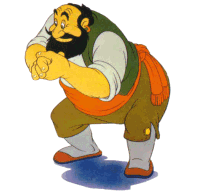
Then we move to famous cartoon villains:
Brutus/Bluto from Popeye
Stromboli from Pinocchio
Jafar from Aladdin
Captain Hook, once more
Duke Igthorn from Disney's Adventures of the Gummi Bears
Wario
And finally some archetypal villains of no particular classification:
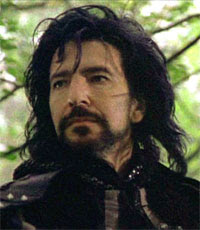
The Sheriff of Nottingham
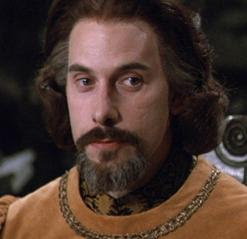
Count Rugan (aka, "The Six-Fingered Man") from The Princess Bride
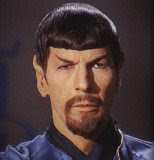
"Evil" Spock
Andy from Pee Wee's Big Adventure
I guess my issue with this campaign tactic is not so much the dishonesty or lax ethics. What is truly disturbing is the idea that in 21st century American politics, a major party candidate feels the need to appeal to ignorance, xenophobia and racism in order to secure victory. Of course, even if Tom Perriello actually did look like Stromboli, that's still no reason not to vote for him. But evidently Virgil Goode doesn't think very highly of the voters in his congressional district. He believes these people are more likely to react to sinister images of his opponent than to vote on character or issues. In an election year that has seen a floundering American economy and two stagnant wars, that is an extremely cynical assessment of American political will.
On the September 12, 2008 edition of his HBO talk show, Bill Maher defined cynicism as it relates to the token nomination of Sarah Palin:
A real cynic is someone...who knows better but knows that the stupid people don't. They know what the dumb people don't but they know that somebody like that [Palin] can get over on the dumb people.
Virgil Goode certainly fits this definition of cynicism. Who knows? Maybe he's right. Maybe the best way to get elected to political office is to trick your constituency. One would hope, however, that this type of campaigning backfires on the GOP. One would hope for a voter revolt of sorts, where people simply say, enough already. We're tired of being talked down to. We're tired of being frightened into voting Republican. We're tired of Republicans assuming we hate foreigners and wierd names. Impeding this "revolt," unfortunately, is the fact that this Karl Rove style of campaigning usually works. As long as it works, I don't expect Republicans to stop employing it. So it's up to voters themselves to wise up. It really doesn't matter if Tom Perriello looks like a dark-skinned foreigner or whether Barack Obama has a peculiar sounding name. Here's a general rule you might want to follow: If Virgil Goode's attack ad makes you more likely to vote for Virgil Goode, then you probably shouldn't be voting.
During the course of the 2008 presidential campaign, John McCain has reversed course on more issues than one can count. Today, however, McCain outdid even himself when he called for a suspension of his campaign to deal with the present economic crisis. Actually, I would assert that McCain's announcement to return to the Senate is really more irony than inconsistency.
Irony #1: Just last week, McCain, amid a catastrophic meltdown in the financial sector, claimed that "the fundamentals of our economy are strong." Today, McCain referred to the same economic environment as an "historic crisis." While leaders like McCain and President Bush have ignored the economic warning signs for months, McCain now seeks to claim that he's the one out in front of this issue. That's quite a bold attempt, considering McCain and his GOP buddies were complicit in stripping our financial system of the very safeguards that are meant to prevent this kind of thing from happening in the first place.
Irony #2: The idea that McCain wants to suspend political activities to get work done in the Senate is, in a word, laughable. McCain has not cast a single vote in the Senate since April 10th. By comparison, BarackObama has voted 99 times since Senator McCain's last vote. McCain has missed a whopping 64% of Senate votes since the 110th Congress was sworn in January of 2007, by far the most of anyone in the Senate. In fact, the only other members of the Senate missing more than 15% of votes either ran for president (Obama, Hillary Clinton, Joe Biden, Chris Dodd, Sam Brownback) or had severe health issues (Tim Johnson, brain hemorrhage, and Ted Kennedy, brain cancer). McCain hasn't felt the need to show up for work for five and a half months, yet now is calling on a suspension of the 2008 campaign to fix a failing economy his party was responsible for creating. I guess that might be funny is it weren't so reprehensible.
Irony #3: Last week, Senator McCain dismissed Obama's concerns over the crashing economy as "political opportunism." If that was indeed the case, McCain has taken that opportunism to a whole new level. By "beat[ing] Obama to the punch" as the Associated Press put it, McCain has in essence forced Obama to either suspend his campaign and risk looking like a Johnny-come-lately, or go ahead with the campaign and be seen as insensitive to the economic crisis. Jumping at an opportunity to put your opponent in a political paradox is the very epitome of "political opportunism".
I think Obama did the right thing in refusing to suspend the campaign. Of the two options, he chose the one that made him look like more of a leader than a follower. Plus he got in that little jab about being able to "deal with more than one thing at once." The ultimate irony - and the reason I believe McCain is taking this siesta - is that by going back to congress to "work on the economy," he won't have to answer as many difficult questions about the economy.
Silver medalists (L-R) Carter, Mondale, Dukakis, Gore and Kerry
The Republican National Convention and the fervor created by the nomination of Sarah Palin has turned the 2008 Presidential Election into quite a barnburner. BarackObama, who has at several times enjoyed as much as a 9-point lead in Gallup polling over rival Republican nominee John McCain, now finds himself in a virtual dead heat with the Arizona Senator.
This should be especially disturbing for Democrats, given that the political climate could hardly be better. An unpopular war, an unpopular president, a floundering economy and a skyrocketing national debt are just a few of the factors in the Democrats' favor. Coupled with the fact that the Democrats have nominated a fresh, exciting and change-oriented candidate in Obama, the Democrats should be burying an old, uninspiring, politically entrenched, retread of a candidate like John McCain. But they're not. Somehow McCain has convinced 45% of the electorate that he and the Republicans are the agents of change. He has convinced them that a woefully inexperienced Governor of very average intellect is qualified to run the United States. (Come on, John. We know why you picked her. You can stop pretending she's qualified now.)
So whatever the reasons are for the Democrats' current predicament, I believe there are ways they can recapture the energy of Denver and possibly win in a November landslide. So if I were advising the Obama campaign (no, seriously, are there any openings?), here's what I would propose:
1. Ignore Sarah Palin
Democrats need to treat Governor Palin as a non-entity. Much to my own surprise, the national media has shown thus far that they are interested in Palin and will not let her lies, scandals and outrageous views go unnoticed. But Palin is not the candidate. John McCain is rife with inconsistencies, bad policies, conflicts of interest, and deep-rooted Washington entrenchment. McCain not only is an easier target, but attacking him doesn't bear as much risk of backlash. Excessive questioning of Palin's credentials could lead some to feel she's being unfairly treated or bullied. Democrats don't want to make a martyr of a "good Christian" rural mother of five. Democrats need to treat Palin as they would treat a rumor about Obama being a Muslim: ignore it, or risk lending credence to it by addressing it. When Republican Senator Larry Craig called a press conference to announce that "I am not gay.... I never have been gay," people must have come away saying, "You know what? I bet he's gay." (of course, if Sen. Craig was gay, he could always visit Sarah Palin's church to get "converted.")
2. Get the Clintons out there
Hillary Clinton may still be stewing over her narrow defeat in the Democratic primary, but she needs to get over it, and soon. I know the Clintons both spoke at the convention, and that's nice. But they need to really get busy for the sake of their party and to ensure that the Clinton legacy is not permanently dismantled by another Republican administration. The Clinton's have the ability to do the following:
Appeal to Southern and moderate voters. Bill Clinton was successful in 1992 and 1996 because he was seen as a centrist and had credentials in the South. 2008 marks one of the extremely rare occurrences in American politics where there has not been someone from the South or the rural Midwest on either ticket. And Bill is in the rare position to say, "Hey, I know moderate. John McCain is no moderate."
Bring Hillary loyalists to the Obama side. Hillary Clinton has scores of followers who appear to have been more interested in electing a woman than electing a Democrat. Hillary needs to show how similar she and Obama are and how distant the McCain-Palin ticket is from either of them.
Attack Sarah Palin. Oddly enough, this parody on SNL made me realize something. Hillary is probably the only person who can attack Palin with impunity. At the very least, she is the position to be the most effective critic of the Alaska Governor. Despite the fact that Obama and Palin have both been criticized for inexperience, religious affiliations, family, patriotism and sex education, some on the right have argued that criticism of Palin is purely a result of sexism. Hillary has the ability to criticize Palin without being viewed as sexist and hopefully make American women realize that the selection of Sarah Palin as McCain's running mate is itself a blatantly sexist act. (further reading on this here and here.)
3. Dumb it down a little
As the enthusiasm over Sarah Palin has demonstrated, Americans aren't going to be voting with their brains any time soon. That is the unfortunate reality for Obama, who is without a doubt a brilliant man. The Columbia University and Harvard Law graduate, former editor of the Harvard Law Review, and former Constitutional Law professor at the University of Chicago probably has the combined McCain-Palin ticket beat in terms of IQ points. McCain ranked 894 of 899 students in his class at the US Naval Academy. Palin attended four different schools, including two stints at the University of Idaho, before attaining her Bachelor's degree in communications. It's not that BarackObama is too smart to be president. On the contrary, I would argue that one can't be smart enough for that job. His problem is that he's too smart for people who would vote for John McCain.
The average voter doesn't get that increased domestic oil drilling will have no immediate effect, very little long-term effect, and will get us no closer to developing cleaner, renewable energy sources. They don't understand that unregulated capitalism leads to the kind of economic disasters we are seeing this week. They don't see how blunders in foreign policy have eroded the global goodwill the U.S. has been building for a century. In essence, they don't understand cause and effect very well, and don't want some politician lecturing them about it. It's sad, but true. Obama needs to hit people with a barrage of "problem-solution" scenarios. There are plenty of problems that need solving, and people generally want a quick fix. Don't tell people all the most intricate details of a solution, how long it will take or how much it will cost. Just tell them it will work.
4. Focus on the economy
McCain this week criticizedObama, calling Obama'sassessment of the crashing Bush economy, "political opportunism." Notice how McCain didn't say Obama'sassessment was wrong, or offer any solution other than setting up a "commission" to study the current economic crisis. Imagine if the 9/11 Commission was formed as the planes were about to strike the World Trade Center. I'm pretty sure the planes would have still hit their target, just as a commission on the economy will not likely deter this current economic free fall. In fact, as Lehman Bros., Merrill Lynch and AIG were collapsing, McCain reiterated his claim that "the fundamentals of our economy are strong." The resulting echoes of laughter must have reached McCain's ears, as he quickly redefined these "fundamentals" as "American workers, innovation, entrepreneurship," bizarrely suggesting that criticism of the economy is akin to criticism of working people. See for yourself:
The point of course, is that John McCain knows next to nothing about the economy, and what he does know is wrong. For example, McCain's chief economic advisor and likely Treasury Secretary Phil Gramm was instrumental in ushering in a new age of financial deregulation and corporate loopholes. Obama needs to show who is responsible for the current economic meltdown, and let the American people know that, aside from the Iraq War, economic policy is where Bush and McCain are probably most similar.
5. Grill McCain on his houses
Various reports have concluded that the McCains own somewhere between seven and nine houses. The Obamas own one. This topic is not simply a personal attack and is very much fair game for the Obama campaign to use. For one, McCain is touting himself as the populist while calling Obama an "elitist." This is almost hysterical, given McCain's aforementioned real estate empire, the fact that he believes only those making more than $5 million are rich, and - hello??? - he's a Republican, the party that for decades has committed itself to making life easier for the super rich at the expense of the middle class. Despite these facts, McCain is still going to try to claim that he's the guy that supports the middle class. Obama needs to mention the 7+ houses whenever it is appropriate and often when it is not. People aren't that stupid. If someone with nine houses says he's in touch with the plight of the middle class, he's lying, and people will know he's lying if they know he has nine houses.
6. Grill McCain on his staff of lobbyists
For reasons unknown to me, John McCain has somehow been able to make a lot of people believe he is a "Maverick," an "Agent of Change" and someone who will clean up Washington. This is highly suspicious given the fact that so many current and former lobbyists are employed in key positions on McCain's campaign staff. Here are just a few:
Rick Davis: campaign manager, partner at lobbying firm Davis, Manafort & Freedman.
Charlie Black: chief campaign adviser, former chairman of lobbying firm BKSH & Associates.
John Green: campaign liason to Washington, current lobbyist for the firm Ogilvy Government Relations
Frank Donatelli: Deputy Chairman of the RNC, former lobbyist for McGuireWoods Consulting.
Randy Scheunemann: foreign affairs advisor, registered lobbyist for the Republic of Georgia.
In fact, according to the website, Mccainsource.com, the candidate has had 133 current or former lobbyists working at various levels in his campaign, many sporting conflicts of interest with either the candidate or the country. And if McCain gets elected, what happens to these high-level lobbyists? They become high-level members of the President's cabinet or staff, giving lobbying firms people on the inside.
For Obama, this one shouldn't be at all difficult. People don't like lobbyists and they don't like hypocrites. By cramming his staff with the former, the Maverick has become the latter. Melanie Sloan of Citizens for Responsibility and Ethics in Washington put it this way: "The problem for McCain being so closely associated with lobbyists is that he's the candidate most closely associated with attacking lobbyists."
7. Grill McCain on his flip-flops
Back in 2004, Republicans painted John Kerry as a flip-flopper. That, along with with smearing a decorated war veteran and "fixing" things in Ohio and Florida, helped the Republicans win a close election. McCain's flip-flopping is legendary. If there ever was an example of a politician that will say anything to get elected, it's this guy. More complete lists can be found here or here, but here are some of the highlights:
Religion: McCain, who once called Reverends Jerry Falwell and Pat Robertson "agents of intolerance," actively sought the endorsement of Paster John Hagee, an equally bombastic Christian ideologue. In an April 2008 interview with ABC's George Stephanopolous, McCain said it was a mistake to accept the Hagee endorsement, then later said he was "glad to have" it.
Taxes: McCain opposed the Bush tax cuts in 2001 and 2003. Now he promises to expand those tax cuts, even amid an economic meltdown.
Economy: In the midst of this week's economic debacle, McCain flip-flopped on regulationin less than an hour. He said "I don’t like excessive and unnecessary...government regulation." Later he said "Do I believe in excess government regulation? Yes."
Immigration:McCain said in January that he would not vote for his own immigration bill he sponsored in 2006.
McCain's flip-flops are especially damning for his campaign because they almost all involve him flopping to the right. McCain the Maverick has built his brand image on bucking his own party, yet in the race for the White House, the GOP seems to have been successful in reigning him in. Obama needs to expose McCain as the master panderer that he is, essentially a political nomad loyal to everyone and to no one.
8. Indirectly attack McCain's age
Obviously Democrats can't explicitly call McCain "too old". They need to imply that he is too old. The two best ways to do that are to stress McCain's public gaffes (i.e., "senior moments") and his ridiculous aversion to technology. All political candidates make verbal errors over the course of a year-long campaign. McCain, however, has really outdone himself this election cycle. He has confused Sunni and Shia. He has mixed up his economic regulatory agencies. He said the Sunni awakening in Iraq was caused by the "surge," when that was not remotely the case. He claimed that Iraq and Pakistan share a border. (They don't) Recently, he started discussing Latin America and Mexico when a reporter asked him about U.S. relations with Spain. Whether these are merely "senior moments" or evidence of a deep lack of understanding we may never know, but either way, this is not good for McCain.
McCain's bizarre disdain for technology is not as widely reported as it should be. I'm not saying a presidential candidate must have a Nintendo Wii and a Blue Ray player before I will vote for him. But in the most industrialized nation in the world, is it too much to ask for the president to be able to use email? It's clear that McCain's technology gap could pose problems in November. As one GOP strategist put it, “If I were counseling John McCain, I would have him standing in line for an iPhone.” Again, inability and/or unwillingness to adopt technology that has been around for 20 years may not be to the benefit of McCain either as presidential candidate or as president. Since he has admitted publicly to being "illiterate," this illiteracy is fair game for the Obama campaign to use to paint the broader picture of a candidate that needs to be put out to pasture.
9. Get people talking about his temper
Most politicians and Washington insiders have known about McCain's nasty streak for some time. From obscenity-laced tirades on the floor of the senate, threats of physical violence aimed at political opponents, and even dropping the "C-bomb" on his own wife, McCain has proven to have a very short fuse. Apparently he once got into a Senate floor fight with a 95-year old Strom Thurmond. Needless to say, a hot-head in the White House is the last thing the country needs. While Obama can't explicitly attack McCain's temper, he needs to find a way to get it out there. In the debates, Obama should try to get under his skin a little and see if he can elicit an outburst. Hey, if Obama is lucky, he may even get a racist eruption from the Arizona senator. Cha-ching!
10. Remind voters that McCain is a Republican
Comparisons of John McCain to George W. Bush may be fairly accurate, but that strategy has seen mixed results for Democrats. According to A CNN poll conducted last week, only 53% of those surveyed felt that McCain would carry on the policies of the current president. If a McCain victory really means a third Bush term, the public isn't buying it. It's as though McCain has acheived a public opinion that more closely associates him with his self-invented "Maverick" brand than with his own political party. If Democrats want to win back the White House, this perception needs to change. The fact that McCain is fleeing the disastrously unpopular Bush presidency indicates that he knows Bush won't be an asset to his campaign. What the Democrats have to do is simplify things. Instead of endlessly dissecting Senate votes and policy positions, Dems need to put it this way: George Bush is a Republican. John McCain is a Republican. Therefore, George Bush = John McCain. While extremes certainly exists within political parties, what gives the major parties their strength is their unity on a vast number of issues. If McCain really had a 50/50 chance of bucking his own party, as Americans now believe, that would potentially fracture the Republican party as we know it. Anyone who believes the Maverick will come out once John McCain is elected doesn't understand American politics or political parties.
Look. John McCain is a Republican. If he wasn't, he would be running as an independent. He's not. He belongs to the same Republican regime that is on the wrong side of issues like Iraq, health care, the economy, the environment, abortion, gun control, and stem cells. He's a member of the same party that has crashed our economy and has erased any credibility we once had with the rest of the world. Most of the people that voted for George W. Bush will also be voting for McCain. Why? BECAUSE THEY ARE REPUBLICANS!!!! There simply aren't enough Republicans out there (27% by recent estimates) for McCain to win this thing unless independents and moderate Democrats vote Republican as well. To prevent this from happening, Democrats need to stop making this about people and start making it about party. When you're dealing with an ill-informed electorate, as we are in the U.S., Republican = Republican is a lot easier to grasp than McCain = Bush.
Today, John McCain surprised many people by selecting Alaska Governor Sarah Palin as his running mate. Like most Americans, I did not know anything about Sarah Palin and decided to investigate. In a nutshell, she's young, inexperienced, a tenacious breeder, and by all accounts squeaky freaking clean. Oh, and she's a dead-ringer for Tina Fey.
But here's what I believe this all means:
Primarily, the selection of Palin addresses the GOP's need to lure women voters. Even if the specter of Hillary Clinton weren't looming over the 2008 election, the choice of a female running mate would still be seen as pandering to the female electorate. Because of the Hillary factor, the McCain camp is again reaping the benefits of a tightly-contested Democratic primary. Lingering Obamocity ("Obama" plus "animosity," it's a portmanteau) among Hillary supporters may lead some to vote for McCain in the general election, especially if he has a woman on the ticket. With Obama choosing not to put Hillary on the ticket with him, some of these women may feel that McCain got it right and Obama got it wrong.
Of course the timing of the announcement, and the selection of a dark horse like Palin has created the media frenzy (free advertising) that the McCain campaign sorely needed on the heels of the Democratic National Convention. The consensus, even among Republicans, is that the McCain camp orchestrated the surprise selection of Palin to maximize the media hype. Evidently, presumptive front-runners Tim Pawlenty and Mitt Romney have said they felt "strung along," "manipulated" and used only as "decoys" in the selection process.
Another reason to pick Palin is her energy policy. Being a pro-drilling governor of an oil-rich state fits well with McCain's own newly adopted drilling plans. Public opinion is also on the side of McCain-Palin, although in this case, the public simply has it wrong. Not only would increasing domestic drilling take years to have an appreciable affect on gasoline prices, but it would do very little to move us towards energy independence. The U.S. Department of Energy estimates that opening up the Arctic National Wildlife Refuge (ANWR) to drilling, which Palin supports, would potentially lower global oil prices by $.41 per barrel. With oil currently around $115 a barrel, that means a savings of 0.3%. Not exactly a great savings. The DOE also states that "OPEC could neutralize any potential price impact of ANWR oil production by reducing its oil exports by an equal amount." Of course people want lower gas prices, but this is a case where the astute candidate will buck public opinion. The impact of increased domestic drilling would be minimal at best, and the tough reality is that high gas prices are likely essential to bringing about energy alternatives.
Of course Palin is a true Republican in almost every sense. She strongly opposes gay rights, is a member of the NRA and Feminists for Life, an anti-abortion organization. She opposed adding polar bears to the endangered species list because of the impact it would have on oil production in her state. She advocated teaching creationism in Alaska's public schools. Oh, and she's got that family values thing covered. She has done her best to add to the world's overpopulation problem by spawning five children, oddly named Track, Trig, Bristol, Willow and Piper. (suck on that, Tagg Romney!).
But in spite of her glistening Republican pedigree, I believe her selection as McCain's running mate may have had more to do with Obama's VP choice than anything. Aside from the aforementioned Hillary factor, I believe the selection of Sarah Palin was done so in large part to offset Joe Biden. The upcoming Vice Presidential Debate is scheduled for October 2, 2008 at Washington Universityin St. Louis. Joe Biden is capable of debating circles around anyone McCain chooses as his VP, and he won't pull any punches. Remember that Biden is the one who had one of the greater moments of the Democratic debates when he said of Republican candidate Rudy Giuliani, "There's only three things he mentions in a sentence: a noun, and a verb and 9/11."
Instead of choosing a candidate that may actually last a few rounds with Biden, he chose someone with no experience in national government and no chance in a face off with Biden. In my opinion, the McCain campaign is hoping the presence of a 44 year old mother of five across the stage from him will either make Biden "go easy" on her or be seen as a bully if he doesn't. I know that is a cynical and probably sexist assessment, but I absolutely believe Biden will now have to ratchet down the vitriol or his wit, candor and years of debating experience may backfire on him.
While the selection of Palin has it's advantages for the Republicans, the one major drawback is possibly enough to offset them all. Palin's age and inexperience essentially mean that attacking BarackObama on the same perceived weakness is now off the table. In fact, one could easily argue that Obama's eight years in the Illinois state legislature and nearly four years as a U.S. Senator easily trump Palin's six years as a small-town mayor of Wasilla, Alaska (pop. 5,469) and two years as governor of the nation's 47th most populous state. But in choosing Palin, either McCain believes he is immortal, or he is willing to concede the argument that Obama lacks the experience necessary to be President of the United States. Clearly McCain is not immortal. If elected, he would become the oldest first-term president in U.S. history. Oh, and his recently released medical records were able to be squeezed into a mere 1,173 pages. So yes, choice of VP does matter, especially in the case of John McCain. His choice to forfeit the right to attack Obama's inexperience is, in my opinion, an egregious error.
Tina Fey look-alike notwithstanding, I think the choice of Sarah Palin as running mate will be one John McCain will ultimately regret.
It seems as though with each passing week, Americans are learning more and more about the disturbed conservative mind of John Yoo. Currently the quintessential fish-out-of-water (he teaches law at UC Berkeley), Yoo worked in the Department of Justice under George W. Bush when the legal underpinnings of unitary executive rule were being established. As it turns out, Yoo - then a fairly low-level DOJ staffer - authored several influential memos supporting the legality of torture, unitary executive power and the suspension of habeas corpus. Because of the far-reaching scope and questionable legality of these memos, Yoo is currently facing charges of war crimes while the National Lawyers Guild is calling for Yoo to be fired and disbarred.
Some of Yoo's greatest hits:
Torture
In 2002, Yoo helped author the now infamous "Torture Memo," which was essentially a liberal interpretation of the interrogation techniques allowed by international law. The memo defined the illegal practice of torture as "equivalent in intensity to the pain accompanying serious physical injury, such as organ failure, impairment of bodily function, or even death." It also stated that the infliction of such pain must be intentional. Such narrow definition of torture opened many loopholes with which the U.S. could conduct a host of "enhanced interrogation techniques." So when the President says the United States "does not torture people," he is technically right, because his administration has exempted itself from international treaties and the Justice Department has worked to redefine torture to legalize what interrogators were already doing.
Habeas Corpus
Keeping with the unprecedented idea that combating terrorism was primarily a military operation, Yoo has argued that the 4th Amendment need not apply to counter-terrorism efforts. This memo concluded that, "the Fourth Amendment [has] no application to domestic military operations," essentially stating that even U.S. citizens under the protection of the constitution are not immune to illegal search and seizures, as long as the country is engaged in any kind of "War on Terror." Of course this is a frightening conclusion. Simply put, the president can determine what is considered terror, who can be considered an enemy combatant, and when and how the military should be used. This leads to a remarkably brash definition of presidential powers, which will be described next.
Unitary Executive Power
Yoo is a proponent of consolidated executive power during wartime. Yoo stated in a 2001 memo:
In both the War Powers Resolution and the Joint Resolution, Congress has recognized the President's authority to use force in circumstances such as those created by the September 11 incidents. Neither statute, however, can place any limits on the President's determinations as to any terrorist threat, the amount of military force to be used in response, or the method, timing, and nature of the response. These decisions, under our Constitution, are for the President alone to make.
Yoo also stated in a 2005 debate that no treaty could prevent the President from authorizing enhanced interrogation techniques, including crushing the testicles of a detainee's child. According to Yoo, the authority to torture "depends on why the President thinks he needs to do that." So, in essence, the President is above the law. Yoo believes there is no law that can limit Presidential powers during wartime, and that the legality or illegality of an interrogation technique is determined solely by what the President thinks.
We can now start to see the neoconservative mindset come into focus. If presidential powers increase when the nation is at war, it's no wonder that the United States has been at war for all but one year of the Bush presidency. And the "Global War on Terror" isn't so much a single operation, but an infinite campaign to somehow eradicate something that can never fully be eradicated. It would be akin to the President declaring that as long as there is crime to fight in the U.S., the president alone can determine how to define crime, how to deal with criminals and which parts of the constitution he needs to adhere to. Like crime, there always has been, and always will be throughout history, acts that could be defined as terrorism.
It would be interesting to hear how Yoo, who has also been a visiting scholar at the conservative American Enterprise Institute, feels about unitary executive power when a Democrat is in the White House. Luckily for us, Yoo has in fact contradicted himself numerous times to fit his political agenda dujour, as Salon's Glenn Greenwalddocumented last July. Yoo has flip-flopped on presidential use of the military, use of executive privilege and FISA laws. If a Democrat wins the presidency in 2008, expect Yoo to moderate his views on executive power to fit his own political agenda.
If John Yoo's sick totalitarian view of constitutional government weren't enough to cement his place among the insane, he recently delved into the world of election politics, the results of which are equally troubling.
In a March 24, 2008 Op-Ed in the Wall Street Journal, Yoo blasted the Democratic Party's use of superdelegates in the nomination process:
That the 2008 Democratic nominee for president will be chosen by individuals no one voted for in the primaries flew for too long under the commentariat's radar. This from the party that litigated to "make every vote count" in the 2000 Florida recount, reviled the institution of the Electoral College for letting the loser of the national popular election win the presidency, and has called the Bush administration illegitimate ever since.
ThinkProgresshighlightedYoo's hypocrisy, as one who would criticize a party's "undemocratic" nomination process while at the same time espousing totalitarian views of the executive office.
More troubling than Yoo's hypocrisy, however, is his startlingly vapid argument. As simple as it may seem to most, Yoo fails to grasp the fact that primary elections do not elect a president. In fact they are not really "elections" at all, but a nomination process, a process that is much more democratic than most other democracies around the world and more certainly democratic than at earlier times in our nation's history. Primary elections were not seen in the United States until the 20th century, and before that relied completely on congressmen and political bosses to nominate a presidential candidate.
Yoo makes the fundamental error of conflating a primary election (a method by which a political party has determined it will nominate it's candidate) with a national election. Yoo claims that the "delegate dissonance wasn't anything the Framers of the U.S. Constitution dreamed up. They believed that letting Congress choose the president was a dreadful idea." The problem with Yoo's analysis is the notion that the founding fathers had some concept of political primaries. They barely had knowledge of political parties, and certainly didn't lay down any foundation as to how parties nominate their candidates.
In addition, one could easily argue that the Democrat's is a more democratic nominating process than that of the Republican Party. The RNC employs a "winner-take-all" system similar to the electoral college in the general election. By allocating delegates based on a percentage of popular votes won, the Democratic nominating process is more representative of the general public than the Republican system. For example, let's say a state has 10 delegates at stake in the primary. In the Democratic Party primary, if Candidate A wins 60% and Candidate B wins 40%, then Candidate A wins six delegates to Candidate B's four. In a Republican primary, Candidate A wins all ten delegates. The Republican system is one that says, essentially, "Get on board with the leading candidate, or your vote won't count." Doesn't sound very "Democratic" to me.
Yoo is correct that the superdelegate system does have the ability to stymie the hopes of a more populist candidate. In close primary elections, as we have this year, the idea is that the superdelagates are there to help cast a deciding vote for the more "mainstream" candidate. This year, we would have to assume that candidate is Hillary Clinton, and the populist is BarackObama. If the superdelegates are here to overrule the will of the common Democrat in favor of someone whom they feel is more of a Washington "insider" (Clinton), then, I would not care for that kind of system.
It's not that Yoo is incorrect in noting that certain flaws exist in the superdelagate system. It is the fact that he somehow believes primary elections should be governed by the the same standards as general elections that completely invalidates Yoo's position. Yoo's column, while not unusual by WSJ's standards, is special in its purely partisan scope and utterly untenable premise. From what we have seen from Yoo thus far, it is safe to assume that the Op-Ed was less an educated critique of the Democratic nominating process than a petty partisan jab at what is perceived as a divided party.





 Captain Jack Sparrow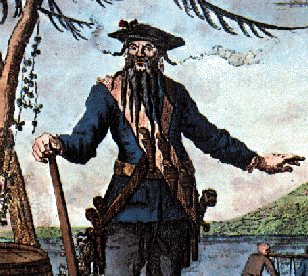

 Captain Morgan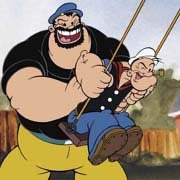
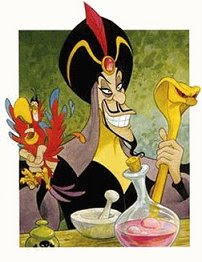 Jafar from Aladdin
 Captain Hook, once more
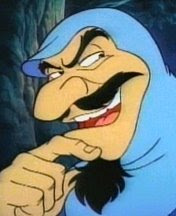 Duke Igthorn from Disney's Adventures of the Gummi Bears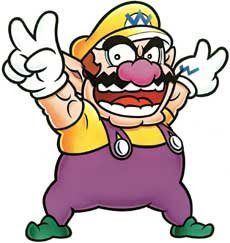


 It seems as though with each passing week, Americans are learning more and more about the disturbed conservative mind of John